What would change if your team could learn
without you?
I turn messy internal knowledge into clear training, practical resources, and role-ready onboarding. Videos, guides, competency frameworks, and learning pathways that help people get it faster, do it right, and stay consistent.
Learning Design
When hiring ramps up, “onboarding” usually means patchwork, and your documentation quietly becomes the bottleneck. I design a clear onboarding pathway for each role (what they learn first, what comes next, and how you know they’re progressing), then rebuild the training assets that make that pathway work, SOPs, guides, checklists, and resources that people can actually follow. The result is a team that ramps faster, asks fewer repeat questions, and does things the same way without needing constant hand-holding.
Full Learning System Design
For businesses that have been operating for a while and "flying by the seat of their pants", I take the knowledge already in the room and turn it into a structured learning process to help:
Onboarding new team members
Develop the knowledge of existing team members
Measure competency
Measure growth
Onboarding Pathway Design
This is usually the first “we need help” moment once hiring starts. Founders want onboarding to be consistent without them personally driving it, and managers want a clear plan that doesn’t rely on memory. A pathway gives structure: what to learn, in what order, with checkpoints that show progress.
30/60/90 day plan per role (what “good” looks like by each stage)
Training sequence (what’s essential first, what can wait)
Manager prompts (what to check, coach, and sign off)
Competency checkpoints (simple evidence-based “can they do it?” moments)
Onboarding pack structure (resources, access, expectations, basics)
Training Assets
When training lives in old PDFs and people’s heads, it slows everything down. I rebuild your SOPs, user guides, and day-to-day resources into clear, role-based documentation, then turn the highest-value workflows into a clean and easy to navigate library so your team can learn in the moment, without interrupting someone or guessing. The result is training that actually gets used: faster onboarding, fewer repeat questions, and more consistent delivery across the business.
Training Asset Build & Rebuild
This is highly sought after when businesses realise their current documentation is slowing everyone down. It’s often a “we’ve got stuff, but it’s messy” situation: outdated PDFs, inconsistent SOPs, and documents that make sense only to the person who wrote them. I validate existing materials, rebuild them and organise them in a structure that makes sense using a simple Learning Management System (LMS) or your existing tech-stack, be it Cloud storage or simple file management.
SOP overhaul (clear steps, decision points, and standards)
User guides + quick reference sheets (practical, not essay-length)
Templates and checklists (so work is repeatable)
Role-based organisation (people see what’s relevant to them)
Content standards (so new documents match the same quality)
LMS implementation and build-out
Instructional Videos
A video library turns “tap someone on the shoulder” knowledge into something searchable, consistent, and easy to reuse across onboarding and refreshers.
Screen recordings for key workflows (end to end, or task-based micro videos)
Role-based playlists (reception, clinicians, billing, managers, etc.)
Companion quick guides (1-page “cheat sheets” for the video topics)
Naming + search structure so people can actually find what they need
Version control for when software updates (so training doesn’t rot)
In a format that makes sense for your business (MP4 for screen or phone, SCORM, Other...)
If any of the below feels familiar, you're not alone...
You’re hiring, and onboarding is inconsistent.
The same questions get asked every week.
SOPs exist, but no one trusts them.
Training depends on who’s on shift.
Software changes break confidence and consistency.
You can feel cracks forming, but you can’t quite name them yet.
You want standards without turning the place into a bureaucracy.
Hey, I'm Whitney
I've spent the better part of 20 years working across operations and learning and development, in environments ranging from MedTech companies to small trades businesses. What I've always been good at is walking into a business, figuring out what needs doing, and actually doing it. Not consulting from a distance. Not handing over a report and leaving. Getting in and getting it done.
At Dewin Co I work alongside small business owners who are brilliant at what they do but stretched too thin to work on the business itself. The list of important stuff that never makes it to the top. That's my territory. Whether it's building training resources for a growing team or sorting the operational side of the business so it stops relying on the owner for everything, I show up, sleeves already rolled up.
Some fun facts about me...
I'm fueled by strong coffees (plural!).
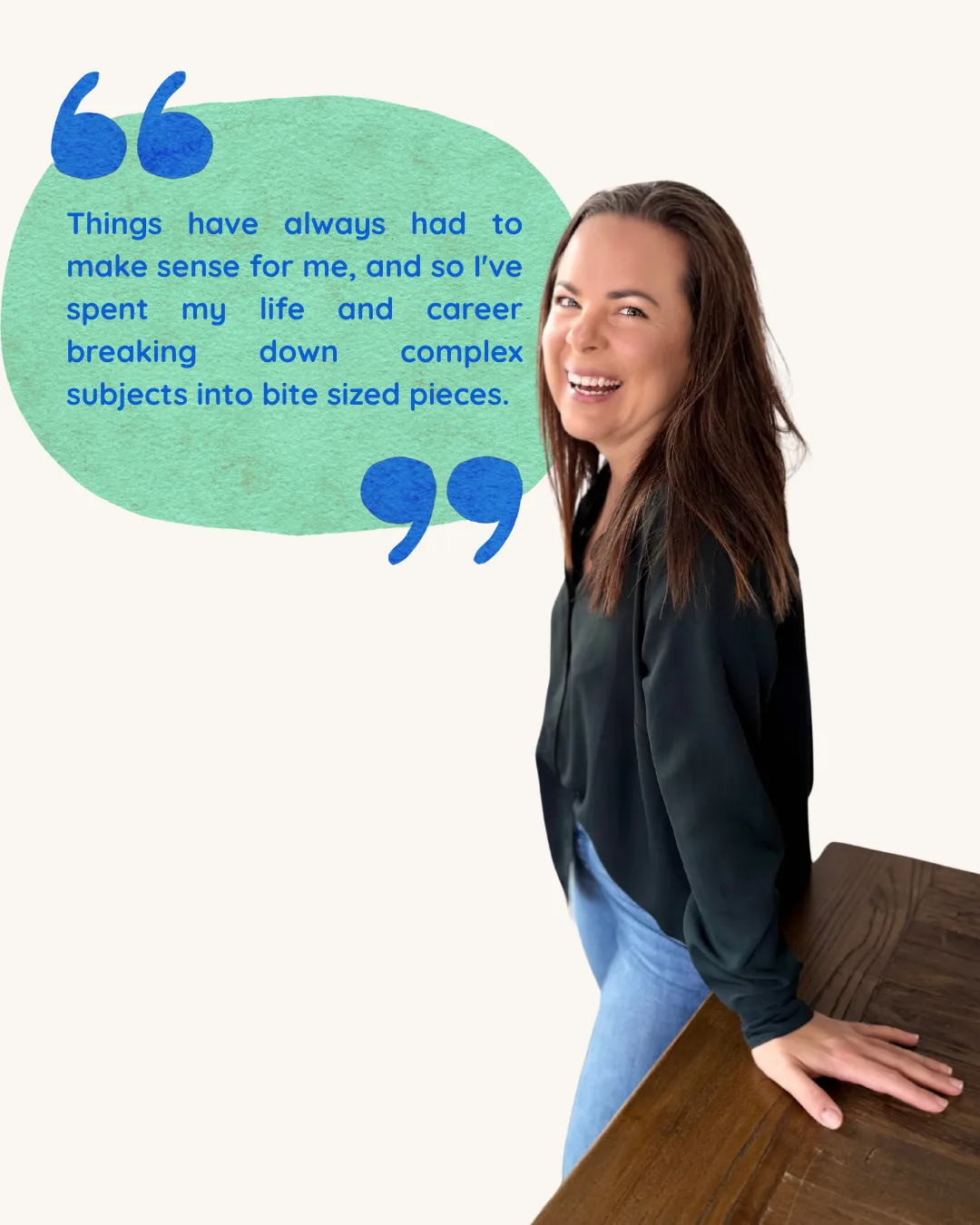
I’m a learning operations strategist with AuDHD, which means I see both the chaos and the order in everything. Things have always had to make sense for me, and so I've spent my life and career breaking down complex subjects into bite sized pieces, placing them into the right order, and making sure that whatever I do makes sense for everyone.
Real-world experience. Built for real teams.
I’ve spent two decades inside growing businesses, watching what happens when training can’t keep up with hiring, software changes, and shifting standards.
Now I design learning systems that make work easier to learn and easier to do: onboarding pathways, instructional videos, competency frameworks, and training resources your team actually uses.
Led training and operational rollouts across large multi-site teams
Built onboarding and learning pathways for growing roles and departments
Turned complex workflows into practical guides, checklists, and video libraries
Designed competency frameworks that made expectations clear and measurable
Businesses who have trusted us




PRICING Guide
Support That Fits Your Business
Every project is unique, but here’s an idea of what investment and support typically look like
PROJECTS
Training gap review (what’s missing, outdated, or unclear)
Role onboarding pathway (30/60/90 day ramp-up)
Instructional video library for key systems and workflows
SOP and user guide rebuilds (clear, current, usable)
LMS structure and course build-out
Competency framework and matrix design
The “we’ve been meaning to fix this” training project that keeps getting pushed back
ongoing L&D support
Monthly training check-ins and priorities (what to build next)
Ongoing updates to resources, guides, and videos as things change
LMS maintenance and improvements (structure, content, pathways)
Competency check-ins and annual review cycle support
Practical support for rollouts, new hires, and new workflows
A steady partner to keep training moving, even when you’re busy
In Practice
Every team runs a little differently, but the goal doesn’t change: clear systems and training that keep work consistent as the business grows. Here are a few examples of how I’ve helped teams replace chaos with structure.
IQ Medical: Learning Design
The challenge
IQ Medical was bringing on new hires with wildly different starting points, from people brand new to the industry through to degree-qualified optometrists and ophthalmology-trained professionals. But training was inconsistent and informal. Most new starters got one or two days shadowing a colleague, then had to piece the rest together on the job. Product knowledge, clinical context, systems, and expectations weren’t structured, so capability depended on who they sat next to and how busy the team was.The approach
I designed and built a complete 60-day onboarding program inside their Learning Management System, with a clear pathway that met people where they were and brought them to the same standard. The program combined short instructional videos, structured resources, quizzes, and assessments, with light gamification to keep momentum and make progress visible. Alongside onboarding, I built a competency framework and matrix that defined what “good” looks like by role and level, then embedded an annual competency assessment cycle so capability could be measured consistently and reviewed against performance goals.The outcome
New hires stopped relying on guesswork and shadowing as the main training method. They had a clear, guided ramp-up that supported different experience levels without diluting standards. Managers had visibility on progress, and the business gained a repeatable system for onboarding and ongoing competency reviews, creating a stronger foundation for performance, consistency, and growth.
d'Albora: Training Library Rebuild for a Complex System
The challenge
d’Albora had a software system that only a handful of people really understood, and most of the training lived in outdated PDF user guides. As they acquired marinas and brought new sites onboard, the Systems and Data Integrity Manager became the default trainer, troubleshooter, and walking knowledge base. Every new site added more questions, more inconsistency, and more pressure, with no scalable way to train teams properly.The approach
I worked closely with the Systems and Data Integrity Manager to extract what mattered from the old PDFs and rebuild it as a clear, role-friendly training library. I created a set of short instructional videos that showed the actual workflows step-by-step, then rewrote the written guides into clean, current PDFs and LMS-ready resources. Everything was structured so training could be assigned, found quickly, and reused across new sites without relying on one person to deliver it live.The outcome
Training stopped bottlenecking through a single manager. New and existing staff had consistent, on-demand resources they could follow without guesswork, and new sites could be onboarded with far less disruption. d’Albora gained a scalable learning library that reduced repeat questions, improved system confidence, and supported growth without stretching internal capability to breaking point.
SIGN UP TO OUR MAILING LIST
A calm inbox for calm operations
Sign up for simple, human-centred advice on training, learning and development and all things operations.
Short reads, useful tools, and the occasional nudge to make things run smoother straight to your inbox.